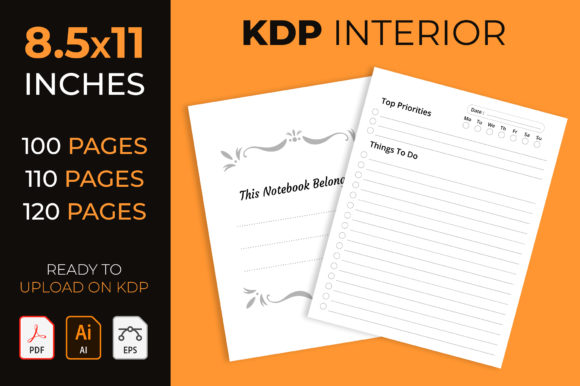
Daily to-Do List Notebook, KDP Interior: Selecting the Right Layout for Low-Content Success
Creating a successful low-content book on Amazon requires more than just uploading a generic template; it demands a strategic approach to interior design that solves a specific problem for the end user. When evaluating a Daily to-Do List Notebook, KDP Interior, the primary goal is to provide a functional tool that helps adults manage time effectively without overwhelming them. Many creators make the mistake of prioritizing aesthetic complexity over practical utility, resulting in notebooks that look beautiful in thumbnails but fail to serve the daily needs of entrepreneurs, freelancers, and busy professionals. A well-structured interior acts as a productivity system, not just lined paper, and understanding the nuances of layout selection is the difference between a returned product and a five-star review.
The Critical Role of Structured Productivity Layouts
A common misunderstanding among new KDP publishers is that any checklist format will suffice. However, effective time management relies on cognitive prioritization, which is why specific layouts outperform generic ones. The most functional interiors include dedicated space for highlighting top priorities alongside standard task tracking. For instance, a layout featuring 3 top priorities at the top of the page forces the user to distinguish between urgent importance and mere busyness. This is a psychological cue that generic lined pages lack.
Beneath this prioritization section, having 16 lines with standard checkboxes provides ample room for business activities and daily tasks without creating visual clutter. When users open a notebook to plan their day, they need immediate clarity. If your interior lacks this hierarchy, you are essentially selling blank paper at a premium price. Professionals aged 20 to 50 are looking for systems that reduce decision fatigue, so ensuring your chosen template includes these specific structural elements is vital for market relevance.
Technical Specifications: Avoiding Printing and Formatting Errors
Even the most beautifully designed productivity journal will fail if the technical execution is flawed. One of the most frequent and costly mistakes in KDP publishing involves incorrect bleed settings and margin miscalculations. Before purchasing or downloading any Daily to-Do List Notebook, KDP Interior, you must verify the technical specifications match your intended publishing strategy.
For an 8.5×11 inch notebook, selecting a No Bleed setting is often the safer and more professional choice for productivity journals. Bleed is typically reserved for full-page illustrations or coloring books where ink extends to the paper's edge. For a to-do list where writing space is paramount, no-bleed formats ensure that margins remain consistent and text does not risk being trimmed during the printing process. Always confirm that the files you acquire are explicitly labeled as "No Bleed" and sized correctly at 8.5×11 inches. Using a bleed template for a non-bleed book can result in rejected uploads or, worse, approved books with content dangerously close to the trim line.
Verifying Page Counts and File Integrity
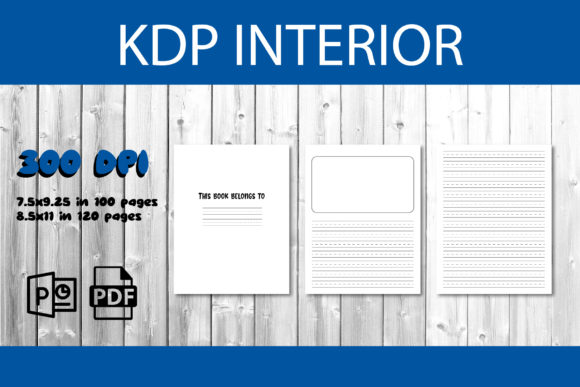
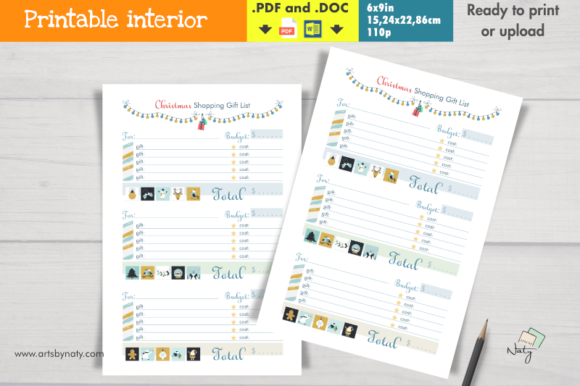
Another area where creators overlook details is page count consistency. Productivity notebooks generally perform best with 100, 110, or 120 pages. This range offers substantial value without making the spine too thick for comfortable desk use or too thin to display the title legibly. When sourcing interiors, ensure the package includes multiple page count options. Having access to 100, 110, and 120-page variations allows you to test different price points and thickness preferences without redesigning the entire interior.
Furthermore, never assume a PDF is print-ready simply because it opens on your screen. You should always check that the files have been tested for KDP upload. Pre-tested files save hours of troubleshooting rejection emails related to margin errors or embedded font issues. If a seller cannot confirm their templates are formatted and tested specifically for Amazon’s current guidelines, proceed with caution.
The Importance of Editable Source Files for Long-Term Value
Relying solely on static PDF files is a significant strategic error for serious KDP publishers. While a ready-to-upload PDF is convenient for beginners, it limits your ability to differentiate your brand in a saturated market. To build a sustainable business, you should prioritize interiors that include editable source files. Specifically, look for packages containing AI Illustrator CC and EPS editables.
Owning the vector source files allows you to:
- Modify fonts to match your cover design or brand identity.
- Add unique headers, footers, or motivational quotes to create proprietary content.
- Adjust line spacing or checkbox sizes based on customer feedback.
- Create niche-specific variations, such as "Teacher Planner" or "Real Estate Daily Tracker," from a single master template.
Without these editable assets, you are locked into a generic product that thousands of others may also be using. Investing in a bundle that includes three PDF files plus corresponding AI and EPS sources ensures you have both immediate upload capability and long-term creative control.
Evaluating Usability for Your Target Audience
Before finalizing your purchase or upload, put yourself in the shoes of your specific audience. A freelancer billing hourly has different organizational needs than a stay-at-home parent managing household logistics. Does the Daily to-Do List Notebook, KDP Interior you are considering accommodate both? The combination of high-priority highlighting and standard task lines is versatile enough for broad appeal, but you should verify the spacing is adequate.
Check the line height on the 16 standard checkbox lines. If the lines are too tight, users with larger handwriting will find the notebook frustrating. Conversely, excessive white space can make the notebook feel sparse and low-value. Practical advice for evaluation includes printing a single test page at home before committing to a full publish. Measure the usable writing area and ensure it aligns with standard penmanship ergonomics. This small step prevents negative reviews regarding usability and demonstrates respect for the customer’s experience.
Making Informed Decisions on Interior Assets
Ultimately, the quality of your KDP business depends on the quality of your raw materials. When comparing different Daily to-Do List Notebook, KDP Interior options, prioritize comprehensive packages over cheaper, limited alternatives. A complete asset pack should include:
- 3 No-Bleed PDF Files: Covering 100, 110, and 120 pages for flexibility.
- 3 Adobe Illustrator (AI) Files: For professional editing and customization.
- 3 EPS Files: For compatibility across different vector software platforms.
By verifying these inclusions and understanding the functional requirements of a productivity journal, you avoid the pitfalls of low-quality publishing. Remember that in the low-content niche, organization and presentation are the products themselves. Taking the time to select a technically sound, user-focused, and editable interior sets the foundation for a listing that serves customers effectively and generates sustainable passive income.