Evaluating Fishing Log Book Journal Pages for KDP Interiors
Fishing Log Book Journal Pages represent a specific category of digital assets designed for the print-on-demand and self-publishing markets. These pre-formatted templates serve as the foundational interior for low-content or no-content books, specifically targeting anglers who wish to document their experiences on the water. For creators in the Amazon KDP ecosystem or independent publishers, these pages are not merely blank lines but structured data collection tools that include fields for recording trip details, environmental conditions, and catch specifics. Understanding the utility, technical specifications, and strategic application of these templates is essential for determining whether they align with current business objectives or personal organizational needs.
Defining the Asset and Its Core Function
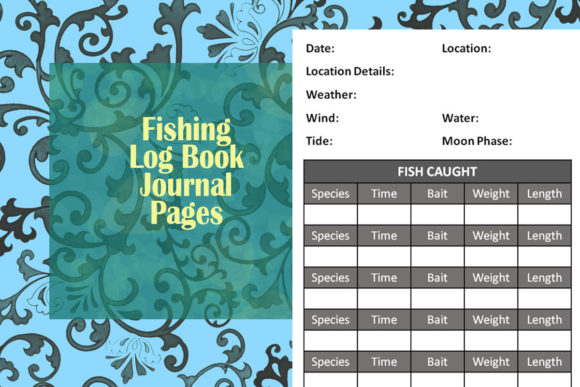
At its most functional level, this product is a vector-based template system rather than a static image. The Fishing Log Book Journal Pages provide a standardized layout for capturing critical fishing data. A typical two-page spread is engineered to maximize information density without overwhelming the user. Common fields integrated into these designs include date, time, location, weather conditions, water temperature, bait or lure used, species caught, weight, length, and personal notes. This structure transforms a generic notebook into a specialized analytical tool for recreational or competitive fishermen.
For publishers, the value proposition lies in the readiness of the files. The inclusion of both PDF and PPT formats ensures compatibility across various workflows. The PDF files offer print-ready stability, while the PowerPoint source files allow for granular customization. This dual-format approach addresses a common pain point in low-content publishing: the inability to modify layouts to differentiate products in a saturated marketplace. By providing editable vectors, the asset shifts from being a finished commodity to a flexible component of a larger creative process.
Technical Specifications and Production Standards
Evaluation of any KDP interior must begin with technical compliance. These Fishing Log Book Journal Pages adhere to the industry-standard 6x9 inch trim size, which remains the most popular dimension for portable field journals due to its balance of writing space and carry convenience. Crucially, the templates account for bleed settings. Bleed is the area of artwork that extends beyond the actual page size, ensuring that when the book is trimmed during manufacturing, no unprinted white edges remain. Failure to incorporate proper bleed often results in rejected uploads or poor-quality prints, making pre-configured bleed settings a significant risk-mitigation factor for new publishers.
The package typically includes distinct file variations to suit different production scales. Users receive a 2-page PDF and PPT file for testing or creating custom-length journals, alongside a comprehensive 120-page file containing 60 complete log entries. This volume calculation is deliberate; 120 pages generally meet the minimum spine width requirements for text printing on many POD platforms, allowing for a more professional retail appearance compared to thinner stapled alternatives. When evaluating this asset, verifying that the margins and safe zones align with current platform guidelines is a necessary step before listing.
Editability and Software Compatibility
The long-term viability of using pre-made interiors depends heavily on editability. While the description mentions compatibility with Adobe Illustrator, Inkscape, and Acrobat, the inclusion of MS PowerPoint files is particularly noteworthy for evaluation. PowerPoint serves as an accessible middle ground between professional vector software and basic word processors. It allows users to adjust fonts, reposition table cells, add branding elements, or alter prompts without requiring advanced graphic design skills. However, users should be aware that while PPT offers accessibility, it may lack the precision of native vector editors like Illustrator when handling complex layer structures or color profiles. Assessing one's own software proficiency against the provided file types is crucial for efficient workflow integration.
Strategic Fit for Low-Content Publishers
For entrepreneurs operating within the low-content business model, these journal pages offer a solution to the "blank page problem." Creating a high-utility fishing log from scratch requires research into what data anglers actually track, followed by hours of layout design and typesetting. Utilizing Fishing Log Book Journal Pages compresses this development timeline significantly. The primary benefit here is speed-to-market and reduced opportunity cost. Instead of spending weeks designing interiors, publishers can focus resources on cover design, keyword research, and marketing strategies.
However, reliance on commercial templates introduces tradeoffs regarding market saturation. Because these assets are available to multiple buyers, there is an inherent risk of homogeneity. To mitigate this, the editability feature becomes the primary differentiator. Successful evaluation involves planning how to modify the base template. Changing the header font, adding a unique logo, adjusting the prompt language, or rearranging specific data fields can create enough distinction to avoid duplicate content penalties and appeal to niche sub-segments, such as fly fishing versus deep-sea angling.
Considerations for Personal Use and Custom Projects
Beyond commercial publishing, individuals may evaluate these pages for personal knowledge management. Anglers seeking to improve their success rates through pattern recognition require consistent data entry. Commercially available physical journals often force users into rigid formats that may not match local fishing conditions or personal preferences. Acquiring the digital template allows for the creation of a bespoke journal tailored to specific needs. For example, a bass fisherman might remove saltwater-specific fields and expand the section for GPS coordinates or depth mapping.
In this context, the cost-benefit analysis differs from that of a publisher. The investment is weighed against the price of premium physical journals and the value of having a perfectly customized tracking system. The ability to print unlimited copies at home or through a local service provider adds long-term value for serious hobbyists who maintain multi-year archives. However, those uncomfortable with digital file manipulation or printer settings may find the learning curve steeper than simply purchasing a pre-bound book.
When Alternatives May Be Preferable
While versatile, Fishing Log Book Journal Pages are not universally optimal. Publishers targeting ultra-niche demographics, such as ice fishing or tournament-specific scoring, may find generalist templates insufficient even after modification. In such cases, commissioning a custom designer or building a layout from scratch based on primary research may yield better product-market fit. Similarly, creators intending to sell digital downloads rather than physical books might require different aspect ratios or interactive form fields that standard print-ready PDFs do not support.
Furthermore, businesses focusing exclusively on high-content educational material may find log pages to be only a supplementary element rather than a core product. If the primary value proposition is instructional text, dedicating 120 pages solely to logs could dilute the perceived value. In these scenarios, integrating a shorter, 10-20 page appendix version of the log might be more appropriate than utilizing the full standalone template set. Evaluating the ratio of content to utility is essential for maintaining product coherence.
Making the Final Decision
Determining whether to acquire these Fishing Log Book Journal Pages requires an honest assessment of technical capability, market strategy, and end-user expectations. For KDP sellers, the decision hinges on whether the time saved in design outweighs the effort required to customize the template sufficiently for differentiation. The inclusion of editable PPT files lowers the barrier to entry, making it a strong candidate for beginners or intermediate publishers looking to scale their catalog efficiently. For individual anglers, the decision rests on the desire for customization versus the convenience of off-the-shelf solutions.
Ultimately, these pages function as a structural scaffold. They provide professional-grade dimensions, bleed settings, and logical data organization that would be tedious to replicate manually. Whether used as a standalone product or a foundation for hybrid content, their utility is maximized when treated as a starting point rather than a final destination. Buyers should verify their software access and review current platform guidelines prior to purchase to ensure seamless integration into their specific publishing or personal tracking workflow.