SuDoKu Puzzles Interior 6x6 for Kids: A Practical Guide for Publishers
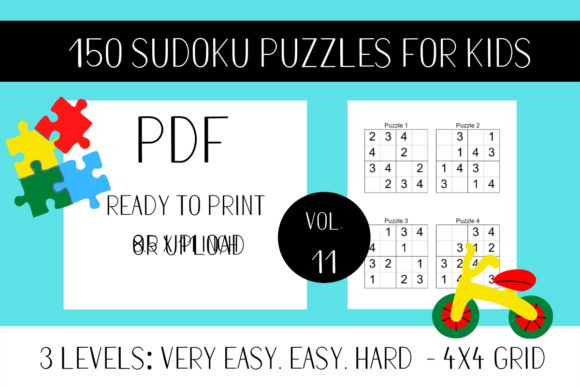
Creating a successful low-content book on platforms like Amazon KDP or Etsy requires more than just uploading a PDF; it demands an understanding of user experience and market fit. The SuDoKu Puzzles Interior 6x6 for Kids serves as a foundational asset for publishers targeting young learners and beginners. Unlike standard 9x9 grids, the 6x6 format reduces cognitive load, making it an ideal entry point for children developing logical reasoning skills. For creators, this specific interior offers a streamlined path to publication, provided it is implemented with attention to technical quality and audience expectations.
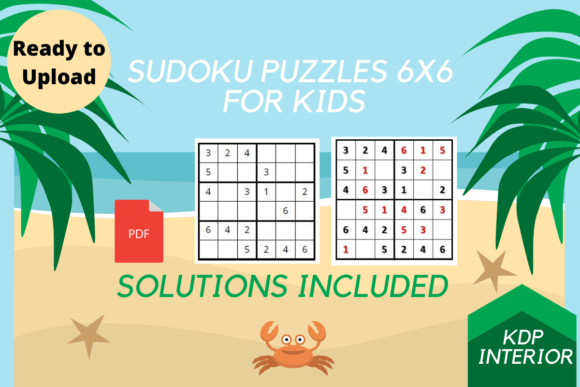
This pre-formatted interior typically includes 200 puzzles with solutions, formatted at 8.5 x 11 inches with one puzzle per page. While this "ready-to-upload" convenience is a significant time-saver, treating it as a finished product without evaluation is a common pitfall. Successful publishers understand that the value lies not just in the grid itself, but in how well that grid translates to a physical book that satisfies customers and avoids negative reviews.
Evaluating Grid Complexity and Age Appropriateness
A frequent misunderstanding among new KDP creators is assuming that any "kids" sudoku interior is universally appropriate for all age groups within that demographic. The 6x6 grid uses numbers 1 through 6 arranged in 2x3 rectangular blocks rather than the traditional 3x3 squares. This distinction is crucial. If your marketing targets ages 4–6, but the puzzles included in the download are rated "Medium" difficulty for older children, you risk frustrating early readers and their parents.
Before finalizing your book, manually test a random sampling of the 200 puzzles. Verify that the difficulty curve is consistent. A common error in mass-produced interiors is erratic difficulty spikes where a puzzle meant for beginners suddenly requires advanced elimination techniques. If the SuDoKu Puzzles Interior 6x6 for Kids lacks a clear progression from easy to medium, consider reordering the pages or curating a selection that ensures a smooth learning arc. Parents appreciate books that build confidence rather than cause confusion, and this attention to curation distinguishes professional publications from generic uploads.
Technical Specifications and Print Quality Checks
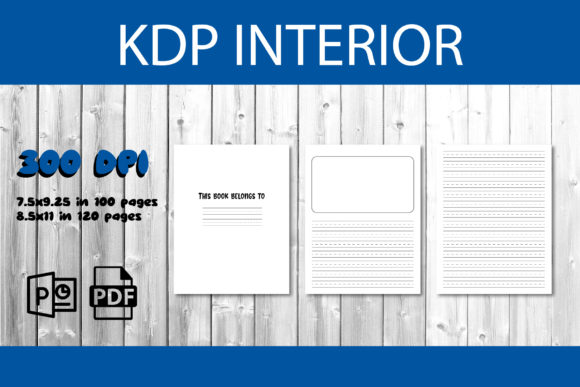
The 8.5 x 11 dimension is the industry standard for activity books, offering ample space for small hands to write. However, simply selecting this trim size does not guarantee a usable product. One of the most overlooked details is margin safety and line weight. When downloading a ready-made interior, always open the file at 100% zoom to inspect the stroke width of the grid lines.
If the lines are too thin (below 0.5 pt), they may appear faint or broken after printing, especially on standard KDP white paper. Conversely, if the lines are excessively thick, they can look clunky and unprofessional. Ensure there is adequate gutter margin; while one puzzle per page minimizes bleed-through issues, you must account for the binding. A practical step is to order a proof copy before launching. Check if the solution pages are clearly separated from the puzzle pages to prevent accidental spoilers. Some interiors place solutions immediately following each puzzle, which ruins the experience for users who want to check answers only after completing a section. Confirming the layout logic prevents functional defects that lead to returns.
Licensing Clarity and Commercial Rights
For entrepreneurs and freelancers, licensing is often the most confusing aspect of using pre-made interiors. The specification "No attribution required" is highly valuable, but it should be verified against the actual license file included with the download. Misunderstanding usage rights can result in account suspensions or legal issues. Specifically, clarify whether the license permits modification. Most commercial licenses allow you to add covers, titles, and introductory pages, but some prohibit altering the puzzle content itself.
Another critical check is exclusivity. If the SuDoKu Puzzles Interior 6x6 for Kids is sold as a non-exclusive PLR (Private Label Right) product, hundreds of other sellers may be uploading the exact same interior. To mitigate this, use your commercial rights to customize the presentation. Add unique branding elements, create custom instruction pages, or combine the sudoku puzzles with other complementary activities like mazes or word searches. This transforms a generic asset into a proprietary product. Never assume that "commercial use" implies you can trademark the interior content itself; you can only trademark your unique brand and title.
Optimizing the User Experience Beyond the Grid
A raw interior file is merely the engine; the user experience is the vehicle. A mistake many creators make is uploading the 200-puzzle PDF without adding necessary front and back matter. A professional activity book requires context. Before the first puzzle, include a clear "How to Play" section specifically explaining the 6x6 rules. Do not assume children or parents intuitively understand the 2x3 block structure. Visual examples are far superior to text-only instructions for this demographic.
Additionally, consider the placement of solutions. Having 200 puzzles means 200 solution pages. If the interior provides solutions in a separate section at the back, ensure they are indexed or numbered clearly. A disorganized answer key renders the book frustrating. If the downloaded file lacks this organization, take the time to reformat it. Adding value through better navigation justifies a higher price point and improves customer satisfaction. Remember that for kids' books, the parent is the buyer; designing for parental approval regarding educational value and usability is just as important as designing for the child's enjoyment.
Making Informed Decisions Before Publishing
Before listing your book, conduct a competitive analysis specifically for 6x6 sudoku. Look at top-selling titles and read the three-star reviews. These often reveal gaps that a standard interior might have, such as "puzzles too hard," "paper too thin," or "instructions unclear." Use this intelligence to audit your chosen SuDoKu Puzzles Interior 6x6 for Kids. If competitors fail because their puzzles are actually disguised 9x9 grids cropped down, ensure yours are true 6x6 layouts designed specifically for smaller grids.
Finally, manage your expectations regarding saturation. The kids' puzzle niche is competitive. Success rarely comes from uploading a single unmodified interior. It comes from treating the downloadable asset as a high-quality starting point. By verifying print readiness, ensuring age-appropriate difficulty, clarifying licensing, and enhancing the user experience with proper instructional design, you move beyond being a simple uploader to becoming a thoughtful publisher. This approach not only protects your investment but also builds a sustainable portfolio that serves its audience effectively.