Evaluating the Student Planner Undated Template for KDP
For self-publishers and low-content book creators, finding a balance between production speed and product quality is a constant challenge. The Student Planner Undated template offers a specific solution for those targeting the academic market without the constraints of seasonal dating. This resource provides both a pre-formatted 100-page PDF tested for Amazon KDP and an editable Adobe InDesign file, allowing creators to either list immediately or customize extensively. Understanding the functional scope, technical specifications, and strategic fit of this template is essential for determining whether it aligns with your current publishing goals.
Defining the Undated Academic Planner Format
The core value proposition of a Student Planner Undated lies in its temporal flexibility. Unlike traditional planners tied to a specific calendar year (e.g., August 2024–May 2025), undated formats remain relevant regardless of when they are purchased or used. This specific template is structured as a school-year planner but omits specific dates on the monthly calendars and daily study pages. This design choice serves two distinct audiences: students who may start their academic term at non-traditional times, and KDP publishers seeking evergreen inventory that does not become obsolete after January 1st.
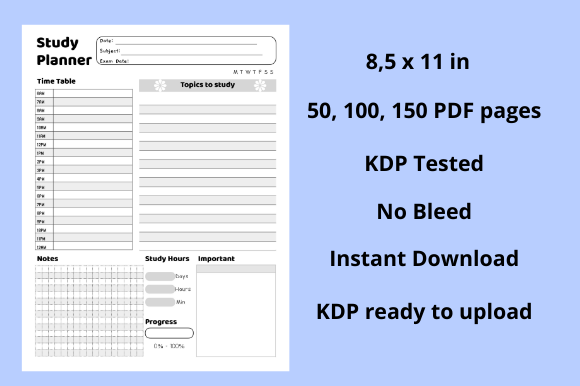
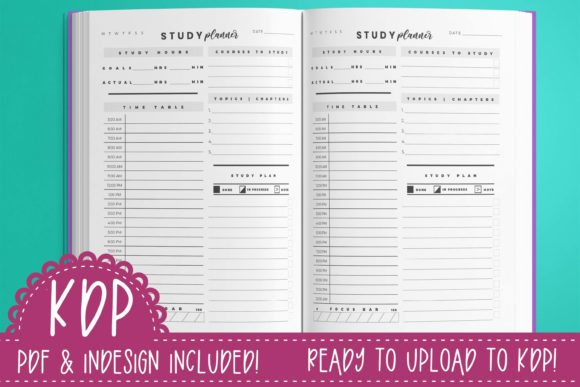
The interior structure focuses on academic functionality rather than general lifestyle planning. It includes twelve monthly calendar pages, assignment trackers, project planning sections, and daily study planner pages. This distinction is critical; this is not a generic notebook or journal. It is a specialized tool designed for middle school, high school, and university students who require structured tracking for coursework and deadlines. For publishers, this specificity targets a niche with higher perceived utility than blank lined journals.
Technical Specifications and Platform Compatibility
Before acquiring any digital asset for print-on-demand, verifying technical compliance is mandatory. This template is configured with specific parameters that directly impact printing costs and user experience.
- Trim Size: 8.5 x 11 inches. This is a standard letter size, offering ample writing space for students. However, publishers should note that larger trim sizes generally incur higher printing costs per unit compared to 6x9 alternatives, which affects royalty margins.
- Bleed Settings: No bleed. All content is contained within safe margins. This simplifies the upload process and reduces the risk of rejection during KDP’s automated review. It also ensures that no critical text or lines are trimmed during manufacturing.
- Page Count: 100 pages. This count sits above the minimum threshold for certain binding options and spine text availability on KDP, lending the book a more substantial feel than thinner notebooks.
- File Formats: Includes a ready-to-upload PDF and an .indd source file. The PDF eliminates formatting errors for users who want immediate listing capability, while the InDesign file supports long-term brand building through customization.
Strategic Benefits for Low-Content Publishers
The primary advantage of utilizing a pre-tested Student Planner Undated template is the reduction of time-to-market. Creating a 100-page academic planner from scratch requires significant layout design, margin calculation, and proofing. By using a verified template, publishers bypass the iterative testing phase where most errors occur. The inclusion of a KDP-tested PDF means the file has already passed platform validation checks regarding margins, resolution, and font embedding.
Furthermore, the undated nature of this planner mitigates inventory risk. In the seasonal planner market, unsold dated stock becomes a liability once the new year begins. An undated student planner maintains search relevance year-round. A student purchasing supplies in October, February, or July can all utilize this product effectively. For publishers relying on organic traffic, this extends the potential sales window significantly beyond the traditional back-to-school rush.
The editable InDesign component adds long-term asset value. Rather than competing with thousands of other sellers using the exact same interior, publishers can modify fonts, add branding elements, adjust section headers, or reorganize layouts. This capability transforms a commodity template into a proprietary product, which is increasingly important as the low-content market matures and differentiation becomes necessary for visibility.
Tradeoffs and Practical Considerations
While efficient, this template presents specific tradeoffs that must be weighed against business objectives. The most notable limitation is the exclusion of a cover design. In the KDP ecosystem, the cover is the primary conversion driver. Publishers must possess or acquire graphic design skills to create a competitive cover that matches the academic tone of the interior. A mismatched or low-quality cover will negate the benefits of a professional interior layout.
Additionally, the "no bleed" specification, while safer for printing, limits aesthetic possibilities. Designs cannot extend to the edge of the page, resulting in a visible white border around all content. While standard for functional planners, some consumers associate full-bleed designs with premium quality. Publishers must decide if the safety and ease of a no-bleed layout outweigh the visual impact of edge-to-edge printing.
There is also the consideration of software dependency. To fully leverage the customization features, access to Adobe InDesign is required. This is a professional-grade application with a steep learning curve and subscription cost. Publishers without existing proficiency may find themselves limited to the static PDF version, reducing the template's long-term strategic value.
Determining Fit: When to Choose This Template
This Student Planner Undated template is best suited for specific operational scenarios. It is a strong fit for publishers who have identified demand in the academic organization niche but lack the design bandwidth to create complex interiors. It is also appropriate for those testing the student planner category before investing in custom development. The undated format makes it particularly viable for sellers focusing on international markets where academic years vary, or for those maintaining a catalog of evergreen educational resources.
Conversely, alternatives may be worth considering if your strategy relies on hyper-specificity. If you are targeting a specialized curriculum (such as nursing school, law school, or homeschooling), a generic student planner may lack the necessary fields for clinical hours, case briefs, or lesson planning. In these cases, a niche-specific template or custom design would likely outperform a generalist option. Similarly, if your brand identity depends on unique artistic illustrations or full-bleed aesthetics, a no-bleed template may conflict with your visual standards.
Making an Informed Acquisition Decision
Evaluating this template requires assessing your current resources and market position. If you prioritize speed, platform compliance, and evergreen utility, the Student Planner Undated offers a reliable foundation. The dual-format delivery accommodates both immediate execution and future iteration. However, success ultimately depends on factors outside the template itself: cover design quality, keyword research, and understanding the specific needs of your target student demographic.
Publishers should view this template as a production tool rather than a complete business solution. Its value is realized only when integrated into a broader strategy that includes professional presentation and targeted marketing. By objectively weighing the convenience of pre-formatted layouts against the need for differentiation and cover investment, creators can determine if this asset bridges the gap between their current capabilities and their publishing objectives.