Triangle Dot Pages: A5 & Letter 100-Page PDF Grids
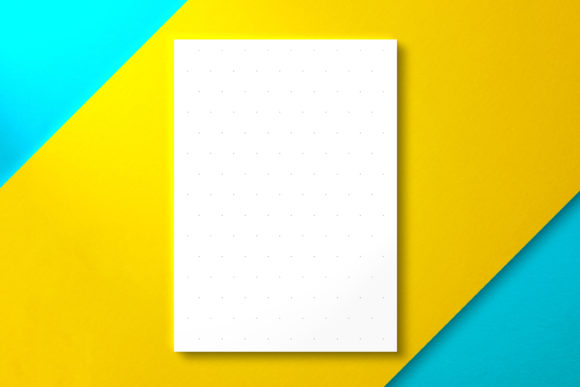
Organizing thoughts, sketching isometric designs, or planning complex projects often requires more than standard lined paper. Triangle dot pages offer a unique structural foundation that bridges the gap between freeform creativity and rigid technical drafting. This digital collection provides immediate access to specialized grids in both A5 and Letter sizes, featuring 15 mm and 20 mm spacing options. Whether you are printing a single reference sheet or binding a full 100-page notebook for daily use, these PDF templates serve as a versatile canvas for a wide range of intellectual and creative tasks.
The core value of this resource lies in its adaptability. Unlike traditional graph paper that forces a square perspective, triangular grids naturally guide the hand toward three-dimensional representation and geometric harmony. For users seeking specific dimensions, the package includes distinct files for every combination: 15 mm and 20 mm grids in both A5 and Letter formats. This ensures that whether you are working on a compact travel journal or a full-sized professional portfolio, the scale matches your physical workflow without requiring manual resizing or taping pages together.
Why Triangular Grids Matter for Different Users
The utility of triangle dot pages shifts significantly depending on who is holding the pen. While a mathematician might see a coordinate system, an artist sees a guide for perspective, and a project manager sees a novel way to map relationships. Understanding these distinct perspectives helps clarify why a single template format serves such a diverse audience.
For Artists and Visual Creators
Creatives often struggle with the "blank page" paralysis or the stiffness of square grids when attempting organic forms. Triangle dot pages provide a subtle scaffold for isometric drawing, tessellations, and mandala creation. The 15 mm spacing is particularly favored by illustrators working in A5 sketchbooks because it offers enough density for detailed work without feeling claustrophobic. Conversely, the 20 mm Letter size allows for broader gestures and larger compositional studies. For digital artists who prefer to print their bases before scanning them back in, having a clean, gray grid ensures that the guidelines remain visible during the drawing process but recede enough to be easily erased or masked in post-production.
Educators and STEM Professionals
In educational and technical fields, clarity is paramount. Teachers explaining crystallography, molecular geometry, or trigonometry find that triangular grids reduce cognitive load for students. Instead of asking learners to mentally rotate squares into triangles, the paper does the heavy lifting. For professionals in engineering or architecture, these pages serve as rapid ideation tools. The 20 mm grid on Letter-size paper provides ample space for annotating diagrams and calculating vectors during meetings or site visits. The availability of 100-page compilations means educators can prepare entire semester workbooks or handout packets in advance, ensuring consistency across all student materials.
Entrepreneurs and Strategic Planners
Business owners and marketers rarely associate triangular grids with strategy, yet they are powerful for non-linear thinking. Traditional linear lists can stifle innovation, whereas a triangular layout encourages connecting disparate ideas. Entrepreneurs use these pages for mind mapping, organizational charting, and visualizing hierarchical data. The A5 format fits perfectly into planners and meeting notebooks, allowing for quick capture of business models or workflow diagrams. The 15 mm spacing is ideal for text-heavy annotations within geometric frameworks, making it easier to integrate written notes with visual structures during brainstorming sessions.
Evaluating Grid Size and Paper Format
Selecting the right configuration from the available PDF files requires matching the grid scale to your specific output goals. There is no universal "best" size; there is only the size that best supports your current project.
- 15 mm Grid Density: This tighter spacing is optimal for precision. It suits detailed technical drawing, small-scale pattern design, and dense note-taking. Users who write small or need to fit multiple elements on a single page will find this scale prevents clutter. It is generally preferred for A5 formats where real estate is limited.
- 20 mm Grid Spacing: The wider interval promotes openness and readability. It is excellent for rough sketching, large-lettering, and high-level conceptual mapping. This size works exceptionally well on Letter paper, providing a breathable layout that feels less restrictive. It is also better for users with larger handwriting or those using thicker markers and fountain pens.
- A5 vs. Letter Dimensions: A5 (148 x 210 mm) is the standard for portability and personal journaling. It pairs well with the 15 mm grid for everyday carry. Letter (8.5 x 11 inches) offers maximum surface area for presentation, archival records, or collaborative desk work. Choosing between them depends entirely on whether priority is mobility or workspace volume.
Practical Application and File Management
This collection is structured to eliminate friction. Rather than navigating a complex archive, users receive eight distinct PDF files tailored to immediate needs. This separation allows for efficient digital organization and printing workflows.
For those testing the waters, the single-page files act as proofs. You can print one sheet of the 15 mm A5 triangle dot grid to test ink bleed, opacity, and visual comfort before committing to a full notebook. Once validated, the corresponding 100-page file enables batch printing. This two-tier approach saves paper and ink during the evaluation phase while supporting bulk production once preferences are established.
The gray color of the grid lines is a deliberate design choice aimed at usability. High-contrast black grids can compete with pencil marks and confuse optical scanners. The muted gray maintains visibility under various lighting conditions while remaining subordinate to user content. This balance is crucial for professionals who may need to photocopy notes or scan sketches for digital distribution, as the background noise is minimized without losing structural guidance.
Determining Suitability for Your Workflow
Before downloading or printing, consider how these templates align with your long-term objectives. If your primary need is standard correspondence or linear journaling, traditional ruled paper remains superior. However, if your work involves spatial reasoning, geometric art, or non-linear planning, triangle dot pages fill a functional void that other stationery cannot.
Beginners should start with the 20 mm Letter size to allow room for error and exploration. The larger scale is forgiving and helps build confidence in navigating the triangular coordinate system. Experienced users and specialists may gravitate immediately toward the 15 mm A5 option for its efficiency and precision. Educators and business owners should evaluate based on their audience's needs; what works for a solo designer may not translate to a classroom handout or a client presentation.
Ultimately, the value of these Triangle Dot Pages Letter A5 100 Pages resources is defined by application. They are tools for structuring thought and enhancing visual communication. By offering multiple sizes and densities in ready-to-print PDF formats, this collection removes technical barriers, allowing users to focus entirely on the content they create. Whether producing a single sketch or a comprehensive workbook, the right grid transforms blank space into a productive environment tailored to your specific cognitive and creative style.