Evaluating the Beekeeping Logbook KDP Interior for Self-Publishing Success
For self-publishers and content creators targeting niche non-fiction markets, the quality of an interior template often dictates the long-term viability of a product. The Beekeeping Logbook KDP Interior represents a specialized asset designed to streamline the production of apiary management journals. Unlike generic notebooks, this resource addresses specific data tracking needs inherent to beekeeping, such as hive inspections, honey harvest yields, queen health monitoring, and seasonal treatment schedules. When evaluating this type of digital asset, the primary consideration is not merely aesthetic appeal but functional utility for the end-user and technical compliance for the publisher.
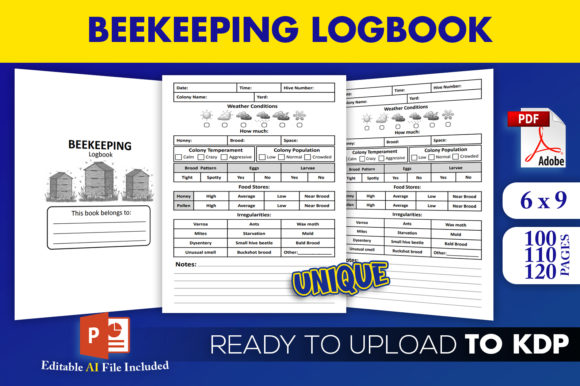
This particular package distinguishes itself through its comprehensive delivery format and pre-validated technical specifications. It includes an editable PowerPoint (PPTX) source file alongside three distinct PDF interiors prepared specifically for Amazon KDP upload. The availability of multiple page counts—100, 110, and 120 pages—provides necessary flexibility for pricing strategies and market testing. For professionals and entrepreneurs in the low-content or medium-content publishing space, understanding the practical application and limitations of this Beekeeping Logbook KDP Interior is essential for making informed inventory decisions.
Technical Specifications and Platform Compliance
The most immediate value proposition of this asset is its adherence to KDP technical standards. Files have been tested on KDP, which significantly reduces the friction associated with self-publishing. Common rejection reasons for logbooks include margin violations, bleed issues, and incorrect spine width calculations. By utilizing pre-tested PDF files at the standard 6x9 trim size, publishers mitigate the risk of formatting errors that can delay launch schedules. The 6x9 dimension is particularly relevant for this niche; it offers a portable form factor suitable for field use while providing sufficient surface area for detailed record-keeping tables and observation notes.
The inclusion of high-resolution interiors ensures that text remains crisp and lines print clearly, even on standard white paper. In logbook categories, legibility is paramount. Faint lines or pixelated text can lead to negative reviews regarding print quality, regardless of the actual printing process. High-resolution vector-based elements within the PDF ensure that the user experience remains professional. Furthermore, the provision of three specific page counts allows sellers to create variations without redesigning the entire interior. This supports A/B testing strategies where a publisher might list a premium 120-page version alongside a more affordable 100-page option to capture different segments of the buyer persona.
Editability and Customization Potential
While ready-to-upload PDFs offer convenience, the editable PowerPoint source file provides strategic longevity. Market saturation in logbook niches often necessitates differentiation. With the PPTX file, users can modify headers, adjust column widths, add branding elements, or tailor specific tracking fields to regional beekeeping practices. For example, beekeepers in different climates may require unique inspection intervals or pest management logs. The ability to customize the Beekeeping Logbook KDP Interior transforms it from a static commodity into a adaptable product line.
From a workflow perspective, PowerPoint is a widely accessible tool compared to professional layout software like Adobe InDesign. This lowers the barrier to entry for educators, hobbyists, or small business owners who wish to publish resources but lack advanced graphic design skills. However, users should approach editing with discipline. Maintaining consistent margins and alignment when modifying slide masters is critical. The source file serves best as a foundation for iteration rather than a complete redesign canvas. Publishers should view the editable component as a means to update content annually or seasonally, ensuring the logbook remains relevant as apiculture best practices evolve.
Functional Design and User Experience
The effectiveness of any logbook lies in its information architecture. A well-designed Beekeeping Logbook KDP Interior must balance structured data entry with open space for qualitative observations. Key characteristics to evaluate in this template include:
- Structured Inspection Tables: Pre-formatted areas for recording temperature, weather conditions, brood patterns, and food stores reduce writing time during field visits.
- Hive Identification Systems: Dedicated spaces for hive numbers, queen markings, and genetic lineage tracking facilitate multi-hive management.
- Treatment and Feeding Logs: Specific sections for documenting chemical treatments, sugar syrup ratios, and pollen patty applications ensure regulatory compliance and colony health history.
- Harvest Tracking: Yield records separated by date and super location help analyze productivity trends over multiple seasons.
- Reference Material: Useful additions often include conversion charts, floral calendars, or emergency contact lists, adding perceived value beyond blank lines.
When assessing this specific interior, verify that these elements are present and logically organized. The layout should guide the user intuitively through the inspection process. If the design forces beekeepers to flip back and forth excessively or lacks adequate writing space, usability suffers. The best interiors anticipate the physical constraints of wearing gloves or working in variable lighting conditions, favoring clear typography and generous spacing over dense, decorative layouts.
Audience Fit and Strategic Application
This Beekeeping Logbook KDP Interior is not universally applicable to every publisher. It delivers maximum ROI for specific user profiles:
- Niche Non-Fiction Authors: Writers producing beekeeping guides or courses can bundle this logbook as a companion workbook, creating an ecosystem of products that reinforces their authority.
- Apiary Supply Retailers: Small businesses selling equipment can offer branded logbooks as upsells or customer loyalty gifts, using the editable source file to incorporate logos and store information.
- Educators and Extension Agents: Agricultural educators can customize the interior to match curriculum requirements, providing students with standardized record-keeping tools.
- Serious Hobbyist Publishers: Experienced beekeepers with insights into local challenges can create region-specific logbooks that outperform generic national alternatives.
Conversely, publishers seeking passive income without niche understanding may struggle. Success with this asset requires knowledge of what beekeepers actually track. Marketing copy and cover design must resonate with authentic apiculture terminology. The interior is a tool, not a substitute for market research. Publishers should validate demand by analyzing competitor reviews, identifying gaps in existing offerings, and ensuring their customized version addresses unmet needs.
Practical Considerations and Limitations
Despite its strengths, potential users must recognize realistic limitations. The PowerPoint format, while accessible, has typographic constraints compared to professional layout programs. Complex table modifications or precise grid alignments may require patience and technical troubleshooting. Additionally, because this is a commercial-use template, other publishers may access identical base files. Differentiation through customization is therefore mandatory, not optional. Relying solely on the stock PDFs increases the likelihood of duplicate content flags or marketplace invisibility.
Print quality expectations also warrant management. While the files are high-resolution, KDP’s standard color printing uses lighter paper stock than premium offset printing. Users should order proof copies before launching to verify that line weights and gray shades reproduce acceptably. What appears optimal on screen may print too light or too dark. Testing the Beekeeping Logbook KDP Interior in physical form remains the only reliable validation method. Furthermore, seasonal demand fluctuations characterize this niche. Sales typically peak in early spring as beekeepers prepare for the active season. Inventory planning and marketing campaigns should align with these biological cycles rather than arbitrary calendar dates.
Long-Term Value Assessment
Ultimately, the worth of this Beekeeping Logbook KDP Interior extends beyond individual unit sales. It functions as a scalable asset within a broader publishing strategy. The combination of ready-to-use PDFs and an editable source file supports both rapid deployment and sustained product evolution. For professionals treating self-publishing as a business rather than a lottery ticket, this duality is crucial. It enables quick market entry while preserving the capacity for refinement based on customer feedback and changing industry standards.
Evaluating this resource requires balancing upfront cost against potential efficiency gains. Time saved on formatting, testing, and basic design translates directly to opportunity cost. If the interior accelerates time-to-market by weeks or prevents costly reformatting cycles, the investment justifies itself regardless of initial sales volume. However, sustainable success depends on integrating this tool with genuine expertise, thoughtful customization, and responsive customer engagement. The Beekeeping Logbook KDP Interior provides the structural foundation, but the publisher supplies the strategic vision necessary to transform a template into a valuable resource for the beekeeping community.